Carrier Lock Policies Updates (e.g., Verizon’s 60-Day Unlock Debate)

Introduction: Why Carrier Policies Keep Changing

Mobile carriers constantly re-evaluate their device-lock policies — often in response to fraud, resale markets, regulatory pressure, or business strategy. As a user or reseller, this can feel confusing: one day a phone is eligible to unlock, the next the rules shift.

In 2025, key providers are reconsidering their unlock timelines or tightening eligibility conditions — which directly affects when and how you can free your device. Understanding these updates is essential if you want to unlock your phone quickly and reliably.

This article breaks down what’s new with carrier lock policies, especially in the U.S. and Europe — why changes matter, and how a trusted unlocking service can help you stay compliant and ready.


Verizon’s 60-Day Unlock Debate

What is the 60-Day Rule?

Verizon’s long-standing policy has been to keep devices locked for the first 60 days after activation (postpaid and prepaid alike) before automatically removing the lock.

This lock period was originally part of licensing conditions tied to its network spectrum. After 60 days — assuming the device isn’t flagged for theft or fraud and the account is in good standing — the device should unlock automatically.

What Changed in 2025

In May 2025, Verizon filed a petition with the Federal Communications Commission (FCC) requesting the right to extend the lock period beyond 60 days. Their argument: the 60-day rule makes subsidized devices vulnerable to resale fraud and international trafficking.

If approved, this would allow Verizon to set a longer — potentially six-month or more — lock before unlock eligibility.

Why It Matters

  • Devices bought under Verizon may remain locked longer, even if you meet previous eligibility criteria (paid device, active account, etc.).
  • Automatic unlock after 60 days may no longer be guaranteed — you may have to wait longer or meet additional conditions.
  • For travelers, resellers, or people switching carriers, this increases uncertainty and reduces flexibility.

Bottom line: If you rely on Verizon’s auto-unlock rule, 2025 changes could delay freedom — so you might need a more reliable unlocking solution.


What About Other Major Carriers?

AT&T

AT&T generally allows devices to be unlocked once they meet a few criteria: the device must be bought over 60 days ago (or fully paid off), it can’t be active on another account, and the account must be in good standing.

However, after a policy update in 2023, even fully paid devices now must wait 60 days — a change from prior policy which sometimes allowed immediate unlock for outright purchases.

T-Mobile

T-Mobile typically supports unlocks after 40 days for postpaid customers, assuming all other eligibility criteria are met.

For prepaid or MVNO-affiliated lines, unlock rules can differ widely, often requiring longer service periods or manual unlocking procedures.

European and Global Carriers (e.g., Vodafone and Others)

Policies vary: some providers unlock quickly, others tie it to contract completion or retail sale conditions. For many global carriers, unlocking remains possible — but rules change often depending on local regulations, market strategy, and subsidy models.

Because of the variability, it’s harder to state a universal unlocking timeframe for Europe and other regions.


What Users Should Know (in 2026)

With these shifting policies, here’s what you need to keep in mind when you plan to unlock:

  • Lock periods may change. Carriers may extend waiting times (e.g., Verizon’s petition).
  • Payoff and account status still matter. Even if the device is paid off, unpaid bills or account issues can prevent unlock.
  • Carriers treat post-paid and prepaid differently. Prepaid or MVNO devices often have stricter or longer unlock eligibility terms.
  • Automatic unlocks are not guaranteed any more. With policy revisions, “auto-unlock” could become manual or optional.
  • Fraud, theft, or reporting flags block unlock entirely. If a device is flagged as stolen or tied to fraud, unlock is denied — permanently.

For users, that means uncertainty. A device you expect to unlock in two months may now take six — making travel, resale, or carrier switching tricky.


How to Unlock Faster — 3 Smart Strategies

If carrier policies become stricter, you still have ways to reclaim flexibility and control.

1. Check Carrier Requirements Carefully

Before buying or unlocking:

  • Confirm purchase date and activation date.
  • Ensure device is fully paid off (no financing or installment obligations).
  • Verify your account is in good standing.
  • Confirm that the device is not reported lost, stolen, or flagged.

Meeting all criteria increases your chance of eligibility once the carrier’s lock period ends.

2. Time Your Unlock Request Strategically

If you’re with carriers known for lock delays (or you purchased recently), consider unlocking before you have immediate need — for example, before travel or resale — to avoid surprises.

3. Use a Trusted Third-Party Unlock Service

Because carriers may tighten or delay unlock policies, a reliable third-party unlocking company can often bypass delay risks by using official, IMEI-based unlock methods. This ensures:

  • Permanent unlock, regardless of carrier policy changes.
  • Compatibility with both SIM and eSIM devices.
  • Transparency, refund guarantees, and prompt unlock delivery.

If your carrier changes unlock rules after you’ve started using their network — or you bought a used device — using an unlocking service can protect your freedom and flexibility.


What This Means for the Unlocking Industry

These shifting policies also affect unlocking businesses and the broader market:

  • Demand for third-party unlocking services is likely to increase — especially if carriers extend lock periods.
  • Users will seek providers with transparent, reliable, and fast unlock methods — not those relying on carrier cooperation.
  • International users, resale marketplaces, and frequent travelers will value services guaranteeing global SIM/eSIM compatibility independent of carrier policy.

In short: as carriers tighten or complicate unlocking rules, independent unlocking services become more relevant than ever.


Conclusion: Stay Flexible — Unlock Smart

Carrier lock policies are changing in 2025. With major players like Verizon pushing for longer unlock delays, and others tweaking eligibility requirements, relying solely on carriers for unlocking has become uncertain.

That’s why professional unlocking services have never mattered more. They keep up with policy changes, use official IMEI-based methods, and offer consistent results — giving you true freedom over your phone, regardless of carrier restrictions.

Our unlocking service stays up to date with all carrier policy changes and ensures your device is unlocked permanently, legally, and globally compatible.

If you want to avoid getting stuck waiting on carrier delays — or if you’re planning travel, resale, or carrier switching — contact us today to get your unlock processed quickly and stress-free.

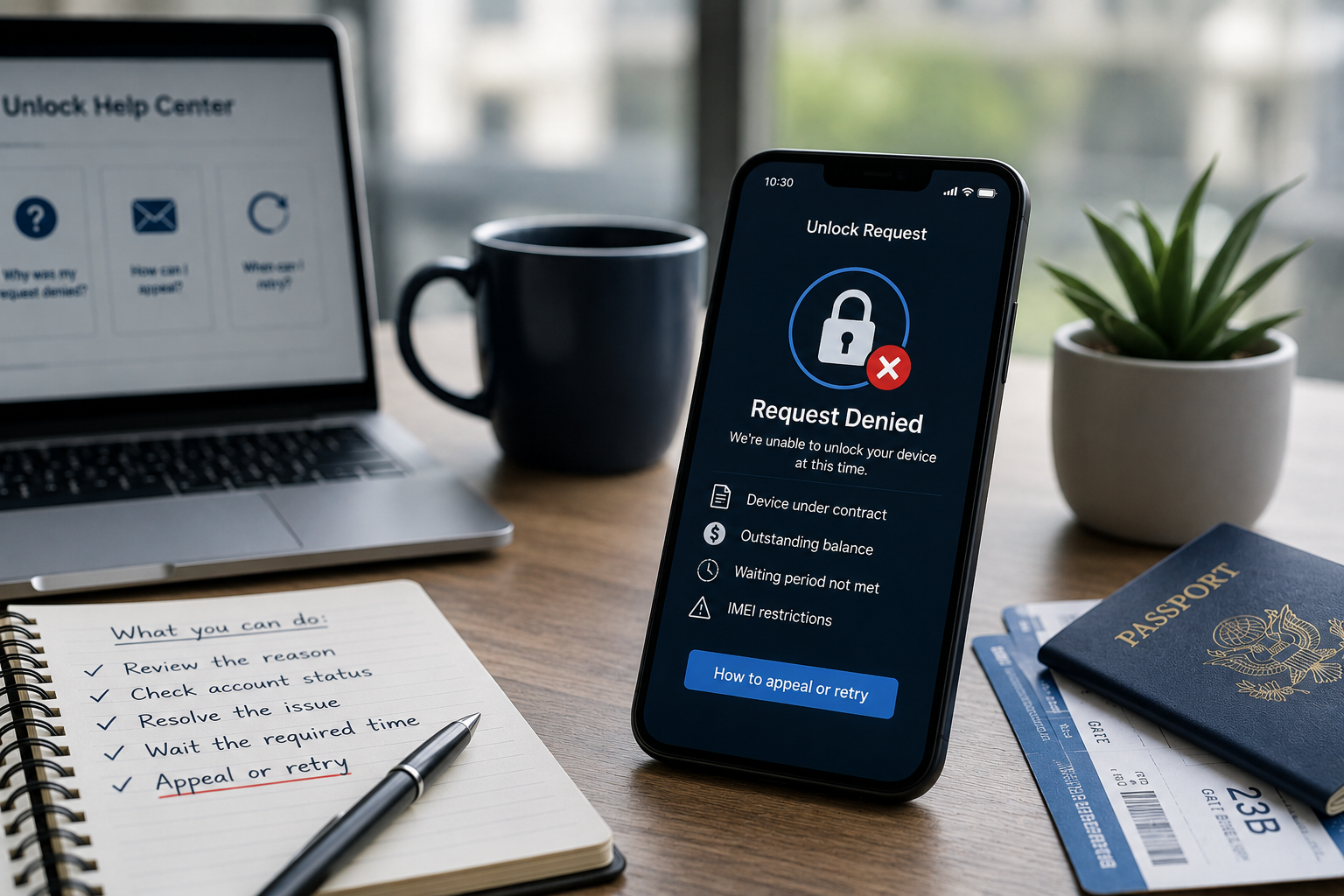
Why You Can’t Unlock Your Phone: Top 5 Carrier Barriers

Introduction: Why Unlocking Fails

Unlocking your phone should be simple — finish your payments, request the unlock, and enjoy freedom across any carrier. Yet, for many users, the process doesn’t go as planned. Even after meeting all the stated requirements, they still get the same frustrating message: “Your device is not eligible for unlocking.”

Why does this happen? Because carriers don’t always make their policies fully transparent. Behind every “60-day unlock rule” or “automatic unlock policy” lie multiple exceptions, regional differences, and system limitations.

In this article, we’ll explain the top five barriers that prevent phones from unlocking — and how to overcome each one with expert, carrier-approved solutions.


1. Active Contract or Installment Plan

One of the most common reasons your phone won’t unlock is that it’s still tied to an active contract or financing agreement.

When a phone is purchased on an installment plan or through a carrier subsidy, the carrier retains control until all payments are complete. Even if the device appears “paid off” in your account, small outstanding fees, insurance payments, or early upgrade balances can still block the unlock request.

How to Fix It

  • Check your payment history: Ensure all installments and early termination fees are paid in full.
  • Contact your carrier: Request confirmation that your balance is cleared and your device is eligible.
  • If delays persist: Professional unlocking services can often process IMEI-based unlocks that bypass these internal carrier delays while remaining official and permanent.

Tip: Always unlock before transferring ownership or canceling your carrier plan. Once an account is closed, the unlock process becomes more complicated.


2. Outstanding Balance or Account Debt

Even a small overdue amount can stop a phone from being unlocked. Carriers typically flag any account with an unpaid balance, even if the phone itself is fully paid off.

This can also apply to shared family or business accounts — one unpaid line can block the unlock of all devices under that account.

How to Fix It

  • Check your billing cycle: Make sure your latest payment has been processed. Sometimes, unlock requests are denied simply because a payment is still pending in the system.
  • Clear any balance: Even a minor overdue amount must be paid before the unlock can proceed.
  • Use a professional unlocking provider: If your account is closed but the device remains locked, an IMEI-based unlocking service can help unlock it safely without needing the original carrier’s approval.

Key insight: Carriers rarely disclose these details upfront, but outstanding balances are one of the biggest hidden causes of failed unlock requests.


3. Blacklisted or Blocked IMEI

Every mobile phone has a unique ID number called an IMEI (International Mobile Equipment Identity). Carriers use it to identify lost, stolen, or unpaid devices.

If a phone is blacklisted, it means it’s reported as lost, stolen, or associated with unpaid financial obligations. Blacklisted phones can’t be unlocked or used with most networks until their IMEI is cleared from the database.

Common Causes of Blacklisted IMEIs

  • The phone was reported stolen or lost by a previous owner.
  • The previous user defaulted on payments or stopped service abruptly.
  • The device was part of a carrier fraud or insurance claim.

How to Fix It

  • Check your IMEI: You can verify your device status using any reputable IMEI checker online.
  • If you bought secondhand: Contact the seller for proof of purchase or request they resolve the issue with their carrier.
  • If legitimate ownership is proven: Some unlocking providers can work with carrier partners to clear IMEI restrictions when possible.

Pro tip: Always check the IMEI before buying a used device — especially from marketplaces or private sellers.


4. Unlock Request Not Processed or Delayed

Sometimes, the issue isn’t a policy barrier — it’s simply a carrier system delay. Even after 60 or 90 days of service, some phones fail to unlock automatically because of technical errors or incomplete requests.

Carriers receive thousands of unlock requests daily, and automated systems occasionally miss updates or fail to sync IMEI data correctly. The result? Your phone stays locked longer than it should.

How to Fix It

  • Verify your eligibility: Confirm with your carrier that your device meets all requirements.
  • Submit a new request: Some carriers allow you to reapply through their online unlock portals.
  • Restart and update your device: In rare cases, phones remain “locked” because the software hasn’t received the final unlock signal.
  • Work with a professional unlocker: Trusted third-party services can directly process unlocks using global carrier databases, ensuring a permanent unlock without waiting weeks for a system refresh.

Reminder: A professional IMEI unlock doesn’t modify your phone’s software — it simply ensures the carrier database correctly lists your phone as unlocked.


5. Region-Specific Locks and Complicated Internal Procedures

Not all unlock policies are equal worldwide. Depending on where your device was purchased or which carrier network it’s registered to, region-specific restrictions may prevent unlocking even after standard requirements are met.

For example:

  • Phones purchased in the U.S. under prepaid programs often have longer unlock waiting periods than postpaid devices.
  • Some carriers in Asia or Europe require in-country usage time before approving unlocks.
  • Regional variants of phones (especially dual-SIM or carrier-customized versions) may have firmware that restricts standard unlock procedures.

Even within the same carrier, different departments handle different unlock requests — adding to the delay and confusion.

How to Fix It

  • Check the device’s origin: Your IMEI can reveal where the phone was first registered.
  • Contact the carrier’s support team: Ask specifically about regional or policy-based exceptions.
  • Use an international unlocking service: Professional unlocking companies specialize in handling devices affected by these region-specific limitations, ensuring compatibility across networks and countries.

Key takeaway: Regional locks are becoming less common but remain a major obstacle for imported or globally traded phones — especially in the used market.


How to Overcome Carrier Unlock Barriers

Whether you’re facing an unpaid balance, a delayed request, or an international restriction, there’s always a solution. The key is using the right method — and working with the right partner.

Step-by-Step Recovery Plan

  1. Identify the barrier: Check if it’s financial, contractual, or technical.
  2. Contact your carrier: Ask for specific reasons your phone remains locked.
  3. Document your ownership: Keep your IMEI, receipts, and carrier account details ready.
  4. Use a trusted unlocking provider: A verified IMEI-based unlock ensures a permanent, safe result — even when carrier systems fail to cooperate.

Professional unlocking services can process carrier-approved unlocks faster, offering customers a clear path to full network freedom.


Conclusion: Unlock Freedom, Overcome Barriers

Carrier restrictions can be frustrating — especially when you’ve done everything right. Active contracts, unpaid balances, blacklisted IMEIs, and regional complications are among the top barriers that prevent unlocking. But none of them are permanent obstacles.

Our expert unlocking service provides fast, secure, and carrier-approved solutions to help you overcome any unlocking barrier. We use official IMEI-based methods to ensure your device is permanently unlocked — safely, legally, and globally compatible.

If your carrier denied your request or you’re tired of waiting, contact us today. Our team will analyze your device, identify the exact cause, and help you unlock it quickly — so you can enjoy complete network freedom without the frustration.

Unlocking Service Fees: What to Expect from Professional Unlocking Services in 2026

In 2025, unlocking a phone is essential for flexibility. Whether you want to switch carriers, travel abroad, or boost resale value, the process ensures your device works worldwide. But one thing many customers ask upfront is: how much does it cost to unlock a phone?

The answer depends on several factors—device type, carrier restrictions, and region. Reliable unlocking businesses base their fees on these elements while ensuring customers receive permanent, guaranteed results.

This article explains what influences unlocking costs, why prices differ across services, and what to look for in a provider to make sure you’re getting fair value.


Professional Unlocking Services: What Sets Them Apart

Unlike carrier-based unlocks, professional unlocking businesses specialize in providing flexible, fast, and permanent unlock solutions. Their prices reflect the resources needed to process unlocks safely through global carrier systems.

Fair unlocking costs are not about being the cheapest—they’re about balancing affordability with reliability, transparency, and support.


Factors That Affect Unlocking Price

Not all unlocks are equal. Here are the main elements that determine cost:

1. Device Type

Flagship models with advanced security (e.g., iPhone Pro, Samsung Galaxy Ultra) require more processing resources than older or mid-range devices.

2. Carrier Restrictions

Some carriers impose stricter locking systems, which increases the complexity—and cost—of unlocking.

3. Region of Origin

Unlocking phones tied to U.S. or European carriers is often more straightforward than devices from smaller regional providers, which can be more complex.

4. Processing Speed

Standard unlock delivery is usually a few days, while priority or express options can cost more due to the resources needed for faster turnaround.

Unlocking costs aren’t random—they reflect the technical work required to free your device securely.


Why the Cheapest Isn’t Always Best

It’s easy to be drawn to the lowest phone unlock price advertised online, but unlocking is about trust and dependability—not just saving a few dollars.

The Risks of “Too-Cheap” Unlocking

  • Unstable results: Unlock may fail after a software update.
  • Hidden charges: Low entry prices can come with add-ons later.
  • No customer support: If it doesn’t work, you’re left without assistance or refunds.

The Value of a Professional Unlocking Business

  • Permanent results: Once unlocked, your phone stays unlocked for life.
  • Global compatibility: Works with SIM and eSIM on networks worldwide.
  • Clear refund policies: Trusted providers return your money if the unlock can’t be completed.
  • Support when you need it: From start to finish, you know exactly where you stand.

Reliability is worth paying for. The cheapest option often ends up costing more in wasted time and frustration.


Unlocking Cost vs Value: The Bigger Picture

When comparing unlocking businesses, don’t just look at price—look at value.

  • Is the unlock permanent? A one-time unlock should last for the life of your device.
  • Is there a refund policy? A clear policy shows the business stands behind its service.
  • Is customer support available? Guidance makes the process stress-free.
  • Does it work worldwide? In 2026, global compatibility (SIM + eSIM) is essential.
  • How established is the business? Longevity, positive customer reviews, and a track record of success are strong signs of reliability.

Price matters, but trust, transparency, and reputation are what make an unlocking business worth choosing.


Final Thoughts: Fair Prices, Clear Policies

In 2026, unlocking costs depend on your device, carrier, and where the phone comes from. Professional unlocking businesses set their prices based on these factors, always aiming to provide permanent, secure results.

The real value isn’t in finding the cheapest option—it’s in choosing a partner you can trust.

Our unlocking service is built on transparent pricing, no hidden fees, and clear refund policies. Whether you need an iPhone or Android unlocked, SIM or eSIM, we deliver results that last and support you every step of the way.

Should You Unlock Your iPhone 17 or iPhone 17 Plus?

Getting your iPhone 17 or iPhone 17 Plus carrier-free has never been more straightforward. With eSIM technology built into these devices, you can break free from carrier restrictions and take full control of your mobile experience.

Understanding eSIM Technology in iPhone 17

The iPhone 17 series brings eSIM capabilities that change how we think about phone activation. Instead of fumbling with tiny physical SIM cards, your carrier can activate service digitally. This means you can manage multiple phone numbers, switch between providers, or add a local data plan without touching any hardware.

Think of it as having a virtual SIM card that lives inside your phone—no trays, no tiny cards to lose, and definitely no paperclip hunts when you need to swap carriers.

Why You Should Consider Getting Your iPhone 17 Unlocked

Freedom to Choose Your Carrier
Tired of your current provider? An unlocked iPhone 17 lets you jump ship to any compatible network without buying a new phone. You’re no longer married to one carrier’s plans, prices, or coverage limitations.

Travel Without the Roaming Shock
International roaming charges can turn a vacation into a financial nightmare. With an unlocked iPhone 17 Plus, you can grab a local SIM card at your destination and pay local rates for calls and data. Your wallet will thank you.

Better Resale Value
Planning to upgrade in a year or two? Unlocked iPhones consistently sell for more than their locked counterparts. Buyers want flexibility, and they’re willing to pay extra for it.

Your Options for Getting It Done

Through Your Carrier
The official route involves contacting your carrier directly. It’s legitimate but often comes with hoops to jump through—account requirements, contract obligations, and sometimes frustrating wait times.

Professional Services
Companies like FreeUnlocks specialize in phone freedom. They handle the technical side while you wait for confirmation. It’s typically faster than going through carriers and works even if you don’t meet traditional eligibility requirements.

DIY Software Methods
Some tech-savvy folks explore software solutions. Just know that these methods can be risky and might void warranties or cause other issues down the line.

Step-by-Step Process

  1. Visit the FreeUnlocks website to begin
  2. Select Apple as your device manufacturer
  3. Choose iPhone 17 or iPhone 17 Plus from the model list
  4. Enter your IMEI number (dial *#06# to find it)
  5. Provide your email address for updates
  6. Select your current carrier and country
  7. Complete the secure payment
  8. Watch your inbox for confirmation and follow the final instructions

Final Thoughts

Getting your iPhone 17 or iPhone 17 Plus carrier-free opens up real benefits—from saving money abroad to having the freedom to choose better plans. The eSIM technology in these devices makes the whole process smoother than ever before.

Whether you’re a frequent traveler, someone looking to cut their phone bill, or just want the freedom to choose your own carrier, an unlocked iPhone 17 gives you control over how you stay connected.

Why TCL Phone Unlocked is Your Best Move

Sick of watching your monthly phone bill drain your wallet? You’re not the only one feeling the pinch. Thousands of consumers are making the smart switch to TCL Phone unlocked devices, and the results speak for themselves: real savings, genuine flexibility, and no more carrier headaches.

While traditional smartphones chain you to expensive contracts and limited options, the TCL Phone unlocked breaks those barriers completely. This isn’t just about having choices – it’s about taking control of your mobile spending and never looking back.

What Makes a TCL Phone Unlocked Different?

Think of your TCL Phone unlocked as a universal key for mobile networks. Instead of being trapped with one carrier’s expensive plans and restrictions, your device accepts any compatible SIM card from any provider worldwide.

Pop in a new SIM, and you’re connected instantly. No permission needed, no hoops to jump through, no waiting periods. Your phone adapts to you, not the other way around.

The Real Money You’ll Keep in Your Pocket

Let’s talk numbers that actually matter to your budget:

Monthly Plan Flexibility: Save $15-30 every month by choosing competitive rates instead of carrier monopoly pricing. Over one year, that’s $180-360 staying in your account.

Hidden Fee Elimination: Carriers love sneaking extra charges onto locked device bills. Your TCL Phone unlocked sidesteps these entirely.

Zero Exit Drama: Found a better deal elsewhere? Switch immediately without penalty fees or termination costs eating into your savings.

Transform Your Travel Experience

International travel with locked phones equals financial pain. Roaming charges can turn a vacation into a budget nightmare, with bills reaching hundreds of dollars for basic usage.

Your TCL Phone unlocked changes this completely. Purchase local SIM cards wherever you travel and pay native rates instead of tourist premiums. We’re talking about 90% savings on international usage – turning $200 roaming bills into $20 local expenses.

Your device works exactly the same way abroad, but your wallet stays happy.

Higher Resale Returns When You Upgrade

Here’s something carriers don’t want you knowing: locked phones have limited resale appeal. Only customers from the same network can use them, shrinking your potential buyer pool significantly.

TCL Phone unlocked devices attract buyers from every carrier, creating competitive demand that drives prices up. Expect 20-30% higher resale values – that translates to an extra $100-200 when you’re ready to upgrade.

Your Complete Savings Picture

Let’s add up what TCL Phone unlocked ownership delivers over 2-3 years:

  • Flexible plan savings: $180-360 annually
  • International travel savings: $50-100 per trip
  • Enhanced resale value: $100-200 bonus
  • Eliminated carrier fees: $150-300 avoided

Combined savings potential: $500-1,000+

Step-by-Step: How to Unlock Your TCL Phone with FreeUnlocks

Getting Your Unlock Code:

  1. Visit FreeUnlocks website
  2. Choose TCL from the manufacturer list
  3. Input your TCL Phone’s IMEI number (found in Settings > About Phone)
  4. Provide your email address for code delivery
  5. Select your current location and carrier
  6. Complete secure payment
  7. Wait for your personalized unlock code via email

Applying Your Unlock Code:

  1. Turn off your TCL Phone completely
  2. Remove your existing SIM card carefully
  3. Insert your new carrier’s SIM card
  4. Power on your device
  5. Input your unlock code when the prompt appears
  6. Confirm success message and enjoy carrier freedom

Make the Smart Financial Move

TCL Phone unlocked represents more than just a device choice – it’s a financial strategy that pays dividends from day one. While the initial investment might be slightly higher than subsidized carrier phones, the ongoing savings compound quickly.

You’ll cut monthly expenses, slash travel costs, maximize resale value, and never face carrier lock-in again. Most importantly, you’ll join a growing community of consumers who refuse to overpay for basic mobile service.

Ready to stop funding carrier profits and start keeping your money? TCL Phone unlocked is waiting to transform your mobile experience and your budget.